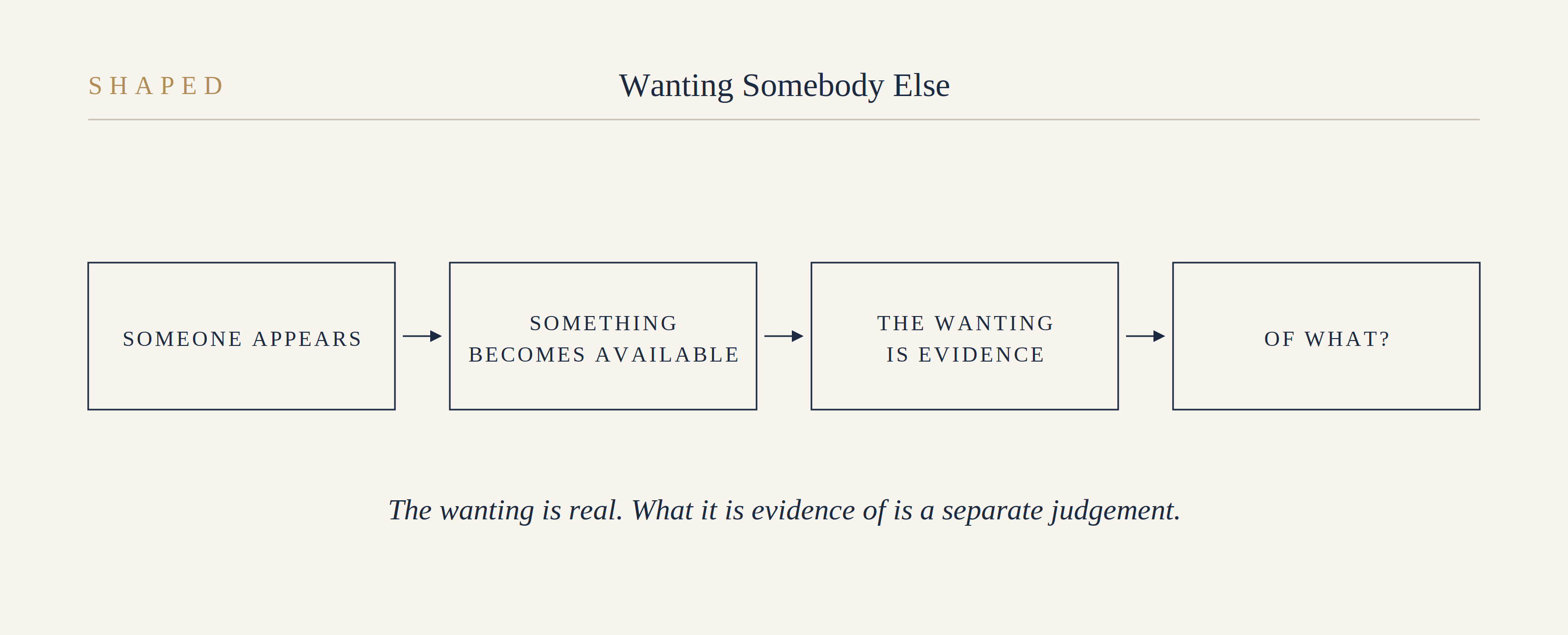
Why one feeling can unsettle an entire story about love.
A woman wrote to The Irish Times last year after finding something on her husband’s phone. They had been married for 17 years and had three teenagers. She described him as kind, hands-on and a great dad. Then she discovered that, for more than six months, he had been exchanging day-to-day voice messages with a married woman he had known at university. According to her account, they had not met. At some point he had asked the woman to move their conversation to a private messenger so his wife would not find it.
Her husband told her that, for about a year, he had felt he could not talk to her, and that he had enjoyed the exchange. He apologised, deleted the woman’s number and blocked her. His wife wrote anyway.
She felt betrayed. Now she had to ask not only what he had done, but what it meant. Had he been lonely? Had he fallen for somebody else? Had she misunderstood the marriage she thought they had? An apology could close the conversation with the other woman. It could not answer those questions for her.
That is the brutal thing about wanting somebody else. The feeling can arrive in a life that is not obviously broken. You can love somebody, know the shape of their face in the dark, have children and mortgage payments and private jokes and years no one else could possibly understand — and still notice another person.
Sometimes it is barely more than that. An actor on a screen. Somebody across a restaurant. A passing thought that disappears before the coffee is cold. Then, sometimes, the other person looks back, and what had been safely inside your own head suddenly seems to have a life outside it.
When a look starts to matter
A glance lasts slightly too long. A colleague remembers something you said last week. Somebody at the gym seems to find a reason to be nearby. You think about the moment later, perhaps while driving home to the person you love. There is pleasure in it, and sometimes alarm. Being wanted by somebody new can make an ordinary day feel suddenly charged.
Almost immediately, the mind wants to know what it means. Why them? Why now? Is there something here?
Perhaps there is. Perhaps not. In one study, people missed flirting far more often than they imagined it. A look can feel obvious and still be hard to read.
Attention can begin changing before anyone has made a grand decision. Research following newlywed couples found that largely automatic patterns of attention towards attractive alternatives were associated with later infidelity. That does not turn a glance into a warning sign. It simply reminds us that some stories begin before we have decided what story we are in.
What happens after the spark
Then the ordinary choices begin. The conversation that could have ended but continues. The coffee that happens to be at the time they are free. The route past the desk. The message you look forward to a little too much. The tiny disappointment when they are not there. The small lift when their name appears on your phone. You read it again. Then you notice that you are reading it again.
None of those moments has to mean an affair is beginning. That is partly why people can move a surprisingly long way without ever experiencing themselves as someone who has made a decision. Each step is small enough to explain.
Silence is complicated too. You do not owe your partner a confession every time another human being catches your eye. Sometimes not speaking is simply allowing a feeling to pass without hurting the person you love for no good reason.
Is the silence protecting your partner from an attraction you intend to let pass — or protecting an attraction you want to keep alive?
Those two silences can look exactly the same from the outside. Inside, they are not the same.
That is what makes the private messenger so painful. The wife did not discover only that her husband enjoyed talking to another woman. She discovered that he had taken a step to keep the exchange from her. Perhaps he still loved his wife. Perhaps he did not yet know what the other woman had become to him. The hiding still changed what his wife had to make sense of.
And then comes a question that can hurt more than asking where anybody’s hands have been: Who now gets to know you?
Who hears the funny story from work first? Who gets the message when you are frustrated or excited? Who knows the part of your day that used to arrive in the kitchen at nine o’clock? To the sender, each message can feel small. To the partner who finds months of them at once, they arrive as a part of the relationship they did not know existed.
Couples draw their lines in different places. One thinks flirting is harmless and sex is the boundary. Another experiences private emotional intimacy as the deeper betrayal. Some couples agree that sex with other people is possible. What matters here is whether both believed they were living by the same promise.
The unfair comparison
There is another reason a new attraction can feel overwhelming: you may be comparing two people who have never had to live under the same weight.
You know your partner through school runs, bills, illness, unfinished jobs, tired evenings and the argument from last Tuesday. You know the other person through attention, possibility and a handful of unusually bright hours. The laugh is real. The attention is real. The way they remember what you said is real. But a fragment can be true and still be a false account of the whole.
That does not mean the existing relationship should survive because it has endured more Tuesdays. People do leave and build lives with the person who once existed only in bright fragments. They eventually see them tired, ill, frightened, boring or worried about money — and love them there too. Sometimes the new relationship really is the better life.
The difficulty is that you cannot know that at the beginning. One person is carrying the full weight of a shared life. The other may still be carrying almost none of it.
Nor should we assume that wanting somebody else can never be telling you something important. Longitudinal research around roughly 1,000 reported infidelity events found that relationship functioning had often been declining before the infidelity was reported. That cannot tell us why a particular person became compelling or whether leaving was right. It only keeps open the possibility that the attraction arrived while something in the relationship or in the lives around it was already changing.
Sometimes the attraction means less than it feels. Sometimes it arrives while something real is shifting. You may not know which for a while.
What does it mean now?
If you are near the beginning of this, you keep thinking about them. You are finding reasons to be where they are. Nothing has happened, and part of you wants very much to keep it that way. Another part of you may be waiting for something to happen.
What happens next will not magically tell you whether you have met the person you were supposed to be with, or whether the relationship you already have has run its course. It may tell you something more immediate: whether you are letting the attraction fade, or beginning to give it somewhere to grow.
There is a difference between noticing somebody and beginning to build a place for them in your life. Between enjoying being seen and arranging to be seen again. Between keeping something private because it will pass and keeping it private because you do not want anyone to stop it.
If you are reading this after something has already happened, the questions become harder, not easier. Perhaps you kissed them. Perhaps you slept with them. Perhaps the thing your partner cannot get past is not the sex at all, but the weeks or months before it: the messages, the anticipation, the part of you that was already turning somewhere else.
What happened matters. It changes what both of you now have to live with and understand. It does not automatically mean that every loving thing you felt before it was untrue.
Human beings can love somebody and hurt them. They can be grateful for a life and restless inside it. They can want two incompatible things. They can mistake the thrill of possibility for destiny. They can also meet another person and realise, painfully, that something in the life they have been living really has changed.
That is why everybody reaches for a clean story. The person who has fallen for somebody new may want the intensity to prove that this must be fate. The person who has been betrayed may wonder whether the years before it meant less than they thought. The hurt does not always stay in the day they found out. It can travel back through the life they thought they knew. A dinner, a holiday, an ordinary evening that once felt uncomplicated can suddenly carry a second meaning.
Years later, either of them may still wonder whether another person changed the life they had, or arrived while it was already changing. Was the wanting a warning, an escape, a beginning, a mistake?
Seventeen years together do not disappear because six months were hidden. Six hidden months do not become unimportant because seventeen years came before them. Love can have been real. So can the betrayal. One truth does not have to erase the other.
That is what makes wanting somebody else so unsettling. It is not only the possibility of another person. It is the possibility that something you thought you understood — your relationship, your partner, yourself, the future you had assumed — may need to be looked at again.
You may let the feeling pass. You may face something in your relationship that can no longer be avoided. You may leave. You may stay. You may hurt someone you love and spend years understanding why. None of those outcomes can be read from the first electric moment when somebody looked back.
The laugh was real. The attention was real. The wanting may be real too.
Some feelings pass. Some change a life. At the beginning, you may have no way of knowing which one this is.